
MEDICAL AUTOMATION EXPERTS
Dietrich Stephan's bio:
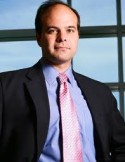 | Dietrich A. Stephan, Ph.D. is currently the President and CEO of Silicon Valley Biosystems (SV Bio), a company funded by Sequoia Capital to accelerate personalized medical solutions. Prior to founding SV Bio he was a faculty member at Harvard Medical School, leading efforts as Executive Director of the "Gene Partnership" at Children’s Hospital Boston (the nation’s number one ranked pediatric hospital) to re-architect their care delivery model to bring modern genomic tools and strategies to bear to improve outcomes. In 2006, Dr. Stephan co-founded Navigenics Inc. with financial backing from Kleiner Perkins Caufield Byers, Mohr Davidow Ventures, Sequoia Capital, Affymetrix, and Google and later served as the company’s Chief Science Officer. Navigenics continues to be the gold-standard in bringing multivariate DNA diagnostics for chronic disease risk prediction, pharmacogenomics, and Mendelian genetics to clinicians in a scalable fashion to power a new era of medicine. Stephan served on the leadership team (August 2002 through April 2008) at the Translational Genomics Research Institute (TGen). His roles at the Institute were Professor and Chairman of the Neurogenomics Department, and Deputy Director for Discovery Research of the Institute overall where he oversaw R&D. Stephan's Division was among the most productive neurological and mental health research groups in the world. Stephan has founded several additional companies in the Bay Area, including Aueon (cancer diagnostics) and Amnestix (based on a publication from his lab in Science describing a novel highly potent cognitive enhancer). He is on the Board of Directors of organizations including Sage Bionetworks, the Personalized Medicine Coalition, and the Rincon. Stephan has won the Bio-IT World Grand Prize in 2005 and the “Most Influential in Bringing Genomics to the Clinic” award in 2010. Dr. Stephan has been featured twice on page A1 of the Wall Street Journal for his contributions to medicine. Specialties: Translational Research, Personalized Medicine, High-Throughput Genomics, Genomic Medicine, Diagnostics Dr. Stephan is founder of Navigenics, Inc and owns stock. |
Dietrich Stephan's posts:
Bridging the Valley of Death, Medical Genetics 2.0, and other Tales of Translational Genomics Research
December 1, 2009 | Dietrich Stephan | Posted in Conference Abstracts 2009,Conference Presentations 2009,Resources
Holistic molecular scanning of individuals has become a robust strategy to develop new ways to effectively diagnose and treat disease. [MORE]
